
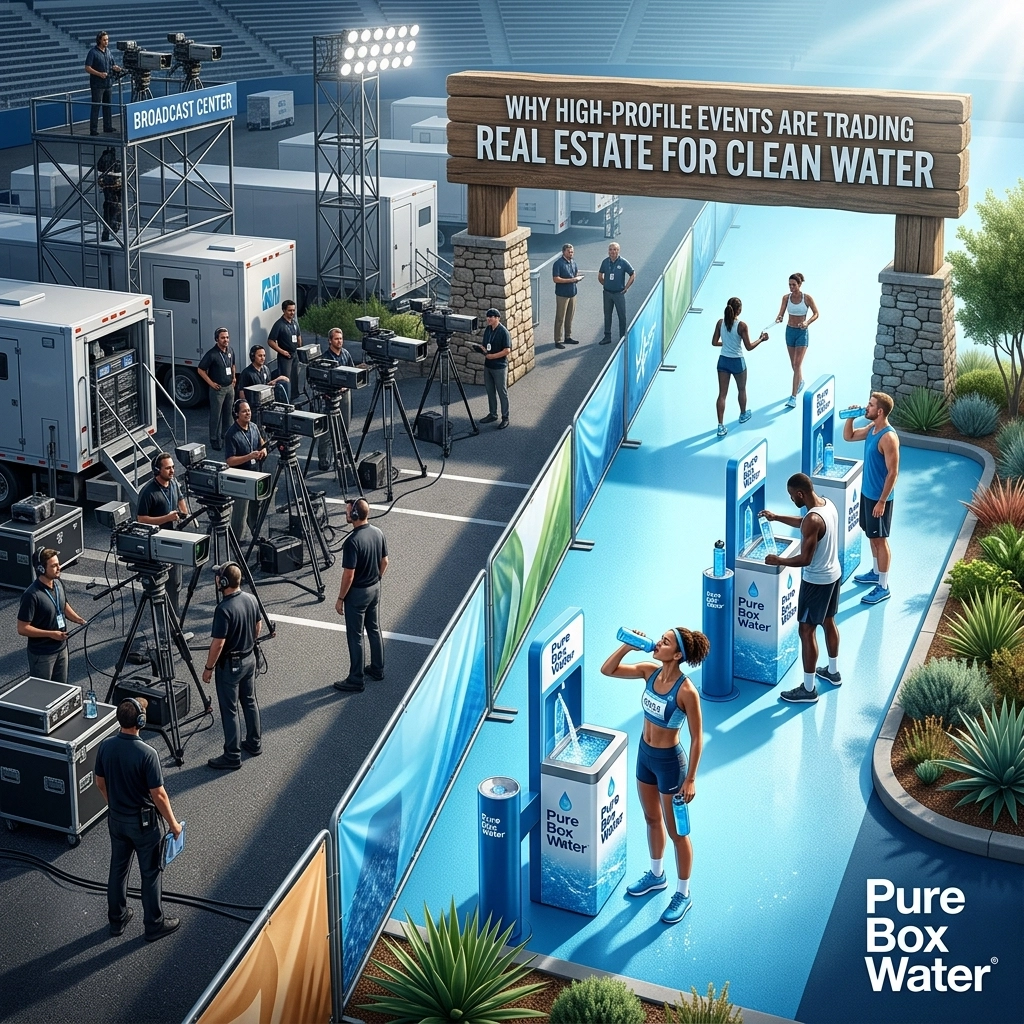
The landscape of high-profile event management is undergoing a fundamental transformation. Historically, the "real estate" of a major event: defined as the physical signage, digital inventory, and broadcast media rights: was reserved for the highest commercial bidder. However, a strategic shift is occurring among event marketers and media rights holders. There is a growing movement toward the "Media Rights Pivot," a model where premium advertising space is traded for sustainable infrastructure, specifically large-scale clean water solutions like the Pure Box Water 1 Million Unit Program.
This transition is driven by a dual necessity: the urgent requirement to meet ESG (Environmental, Social, and Governance) mandates and the logistical challenge of hydrating massive crowds without the environmental footprint of single-use plastics. For organizations such as State Parks, Tourism Bureaus, and Federal Departments of Natural Resources (DNR), this pivot represents more than a marketing choice; it is a critical evolution in how public and private lands are managed and preserved.
In the context of the Olympics, major music festivals, or national park centennials, "real estate" is the most valuable asset an organizer possesses. This encompasses every sightline available to the consumer, from the physical perimeter of a stadium to the digital overlays on a global broadcast. Traditionally, these assets were sold to generate liquid capital. Today, the currency is shifting toward sustainability.

By trading media rights for 1 million units of Pure Box Water, event organizers are effectively internalizing their environmental costs. Rather than purchasing water and then seeking a sponsor to offset the cost, the water itself becomes the sponsorship. This "product-for-media" exchange allows high-profile events to eliminate thousands of pounds of plastic waste while simultaneously providing a premium, eco-conscious beverage to attendees. The media rights holder gains a powerful narrative of environmental stewardship, which often carries a higher long-term brand value than a standard commercial spot.
The logistical complexity of hydrating a high-profile event cannot be overstated. When dealing with crowds that number in the hundreds of thousands or millions, the scale of the solution must match the scale of the problem. This is where the Pure Box Water 1 Million Unit Program becomes a central pillar of the media rights pivot.
Operating at a scale of 1 million units allows for significant efficiencies in the supply chain and logistics. For Tourism Bureaus and State Parks, which often manage vast, geographically dispersed areas, having a standardized, high-volume sustainable water solution is essential. The transition from plastic bottles to fully biodegradable and recyclable paper-based packaging is not merely an aesthetic choice; it is a fundamental shift in waste management strategy. By committing to 1 million units, these entities can ensure a consistent, plastic-free experience across all touchpoints of their jurisdiction.

Tourism Bureaus and State Parks are uniquely positioned to lead the media rights pivot. These organizations are the custodians of the very environments that plastic waste threatens most. When a Tourism Bureau markets a pristine coastline or a State Park promotes its untouched wilderness, the presence of single-use plastic bottles creates a jarring cognitive dissonance for the visitor.
By leveraging their media assets: website traffic, social media reach, and physical park signage: these organizations can partner with Pure Box Water to replace plastic entirely. The trade is simple: the brand receives exposure within the park or tourism district, and in return, the park receives the 1 million units necessary to sustain its visitors without damaging the ecosystem. This model is particularly effective for Departments of Natural Resources (DNR) looking to protect fish and wildlife habitats from microplastic contamination.
One of the most compelling aspects of the media rights pivot is the financial restructuring it enables. Many global agencies and event organizers operate with massive advertising budgets, often exceeding $500,000 for a single campaign. Traditionally, this capital would be spent on traditional media buys.
The pivot encourages these agencies to reconsider that spend. By redirecting an ad budget toward a 1 million unit partnership, the agency secures a tangible, physical presence at the event. The "ad" is no longer a fleeting digital impression; it is the water box in every attendee’s hand. This creates a high-frequency touchpoint that is functionally useful and environmentally responsible. For media rights holders, this provides a "turnkey" sustainability solution that can be presented to stakeholders as a successful execution of plastic-free initiatives.

The focus on Federal Parks and DNR endeavors is driven by the biological necessity of clean water. Sustainable beverages are not just about human consumption; they are about the broader environmental impact. Single-use plastics are a leading contributor to habitat destruction, particularly in aquatic environments.
When high-profile events situated near or within public lands choose the media rights pivot, they are actively participating in the preservation of fish and wildlife. The reduction of 1 million plastic bottles from the waste stream has a measurable impact on the local ecosystem. This alignment with conservation goals makes Pure Box Water a natural partner for federal and state agencies whose primary mission is the protection of natural resources.
For more information on how these partnerships are categorized, you can explore our category pages which detail our work across various sectors.
The move toward paper-based packaging and the trading of media rights for sustainable products is not a passing trend. It is the beginning of a plastic-free revolution in the event industry. As consumers become increasingly aware of the environmental cost of their choices, they are demanding higher standards from the events they attend and the brands they support.
The "Daily Triple" of impact: reducing waste, promoting clean water, and leveraging media for good: is becoming the new standard for excellence in event marketing. Whether it is a global sporting event like the Olympics or a local initiative by a state tourism bureau, the mission remains the same: scaling to 1 million units to ensure that clean water and a clean environment are not mutually exclusive.

For event marketers and media rights holders, the path forward is clear. The traditional model of commercial sponsorship is being replaced by a model of strategic partnership. By trading event real estate for the 1 Million Unit Program, organizations can achieve their sustainability goals while maintaining the high-profile visibility they require.
The media rights pivot is a powerful tool for any organization committed to the future of our planet. It allows for the delivery of pure, sustainable spring water at a scale that can actually move the needle on plastic pollution. As we look toward the future of tourism, public land management, and global events, the integration of sustainable beverages will be the hallmark of a successful, eco-conscious strategy.
By focusing on the mission of replacing 1 million units of plastic with Pure Box Water, we are not just changing how we hydrate; we are changing how the world values its most precious resources. The time to pivot is now. Through the strategic use of media rights and a commitment to massive-scale sustainability, we can ensure that high-profile events leave behind a legacy of clean water, not a trail of plastic waste.